
Tree Trimming & Pruning Service In Orlando FL
Signs Your Orlando Tree Needs Trimming Now
Most trees tell you they need help long before a limb comes down. Dead branches, rubbing limbs, heavy one-sided growth, and branches pressing on a roof are the signs we see most often in Central Florida yards. Catching those early is cheaper, safer, and far less stressful than calling someone after a storm.
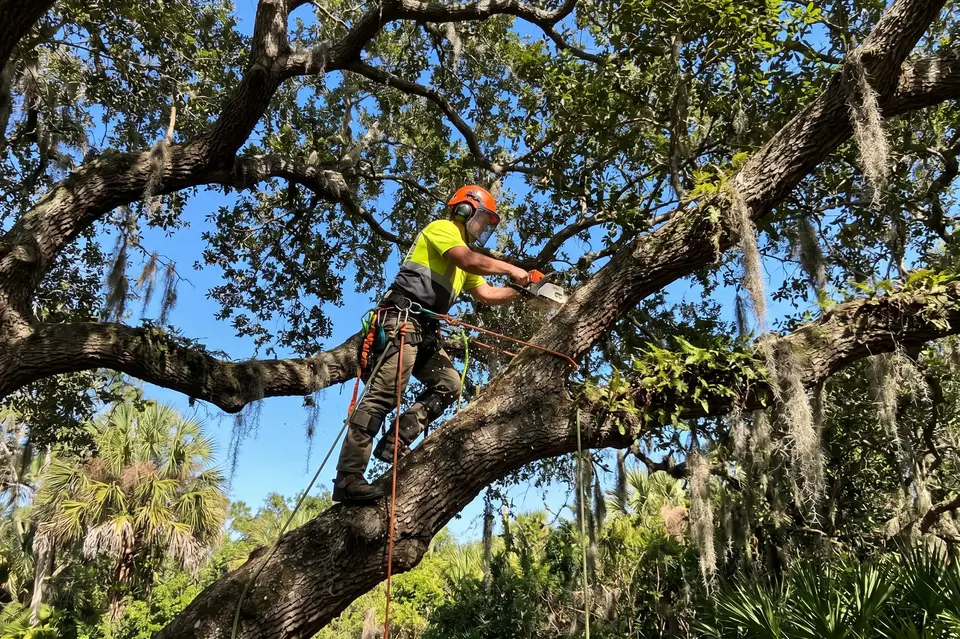
Here's the thing about our weather. Trees in Orlando grow fast and they grow wet. Warm rain from June through September pushes new growth hard, and that new growth is soft. A live oak can put on years of weight in a single summer. Then the afternoon storms roll through and that soft, heavy, unbalanced canopy catches wind like a sail. We see this every single week during storm season.
Walk outside and look up for a minute. Really look. Most folks pass the same tree every day for years and never notice it leaning a little more each season.
Some of the clearest warning signs you can spot from the ground
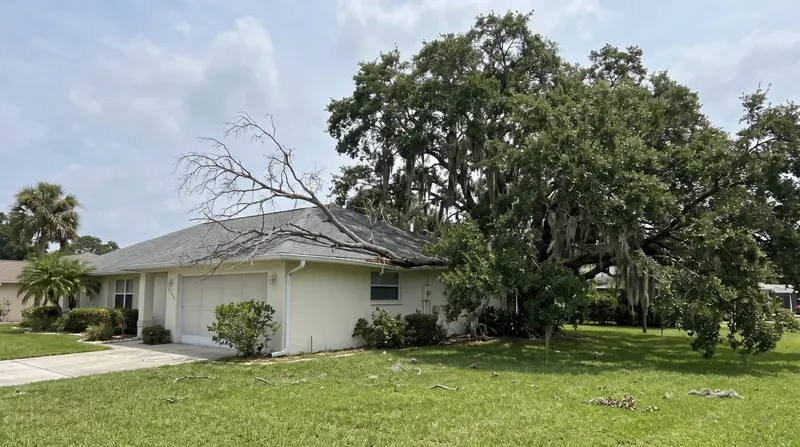
Bare branches with no leaves while the rest of the tree is full
Limbs crossing and rubbing each other, wearing the bark raw
Branches touching the roof, gutters, or a power drop to the house
One side of the canopy noticeably heavier than the other
Hanging or cracked limbs still caught up in the tree after a storm
Thick moss or mildew buildup in a canopy that never dries out
That last one matters more than people think. Our humidity keeps dense canopies damp, and damp wood invites rot. Thinning lets air move through.
Not sure if what you're seeing counts? That's pretty common. A homeowner called us last spring because she heard a scraping sound on windy nights - turned out to be a dead oak limb resting on her shingles.
Oak Pruning and Palm Trimming Require Different Techniques
A live oak and a queen palm don't grow the same way, so they can't be cut the same way. That sounds obvious. But we see the same mistake almost every week, one crew shows up with a saw and treats every tree in the yard like it's the same job.
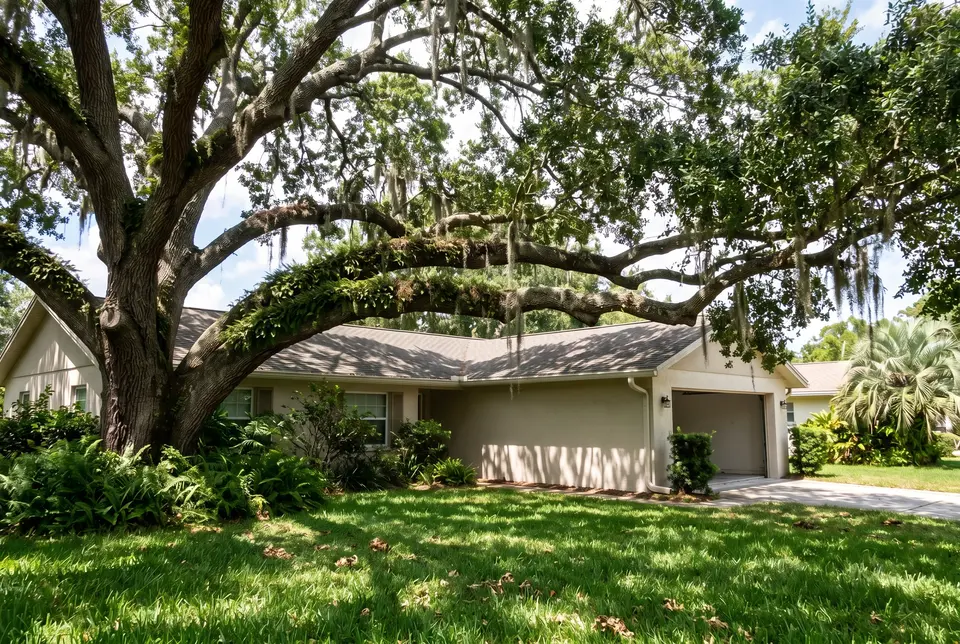
Oaks have a real branch structure.
They heal by growing tissue over the wound, and they only do that well when the cut is made right at the branch collar (opens in new tab). Cut too far out and you leave a stub that rots. Cut too close and you damage the part of the tree that seals itself.
With a mature oak we're mostly thinning, taking out crossing limbs, deadwood, and weak forks.
Never more than about a quarter of the living canopy in one visit. And never the interior only, that hollowed-out look leaves all the weight at the branch tips where wind grabs it hardest.
Orlando's older neighborhoods are full of big spreading live oaks with limbs running over roofs, and those long horizontal arms are exactly what fails in a summer storm.
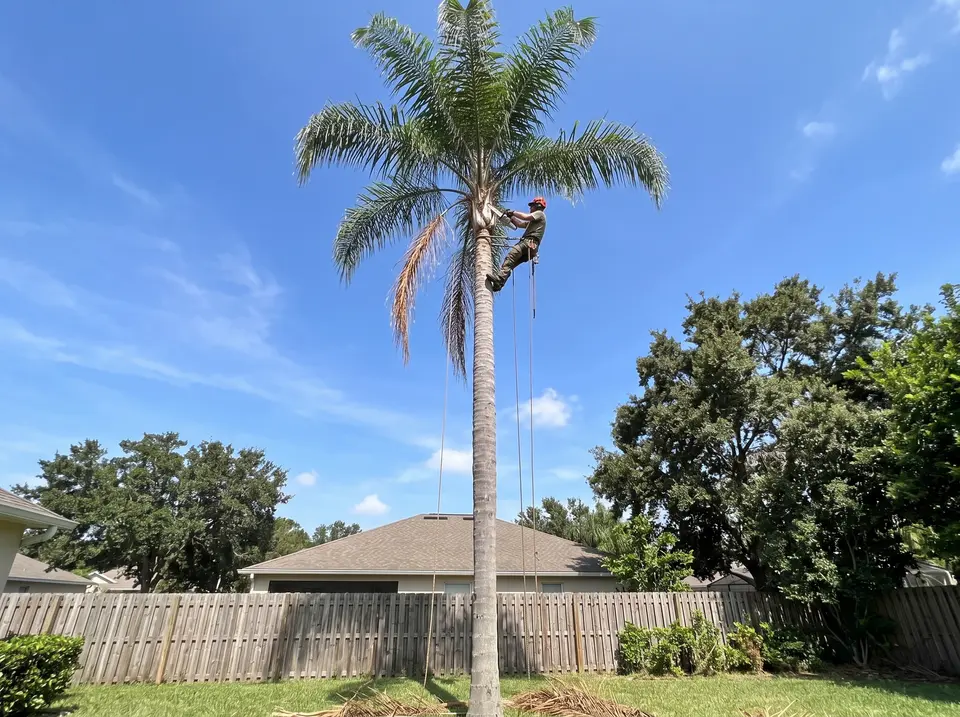
Palms are a different animal.
They don't heal wounds at all. Whatever we cut stays cut.
So with palms, less is more. We take dead and fully brown fronds and old seed stalks. Green fronds stay. A palm feeds itself through those fronds, and stripping them up into a skinny point above the trunk starves it and weakens the crown.
Here's what tells us a palm or an oak is due:
Brown, hanging fronds skirted around the palm trunk
Heavy seed pods or flower stalks dropping onto walkways and pool decks
Oak limbs with no leaves in spring while the rest leafs out
Bark peeling or a crack where two oak limbs meet the trunk
Branches rubbing the roof, gutters, or a power line drop
Not sure which of your trees needs what? That's a normal question. The tree tells us when we look at it, and we'll tell you straight.
When You Don't Need a Professional Crew
Here's the part most tree companies skip. Plenty of pruning doesn't need us at all.
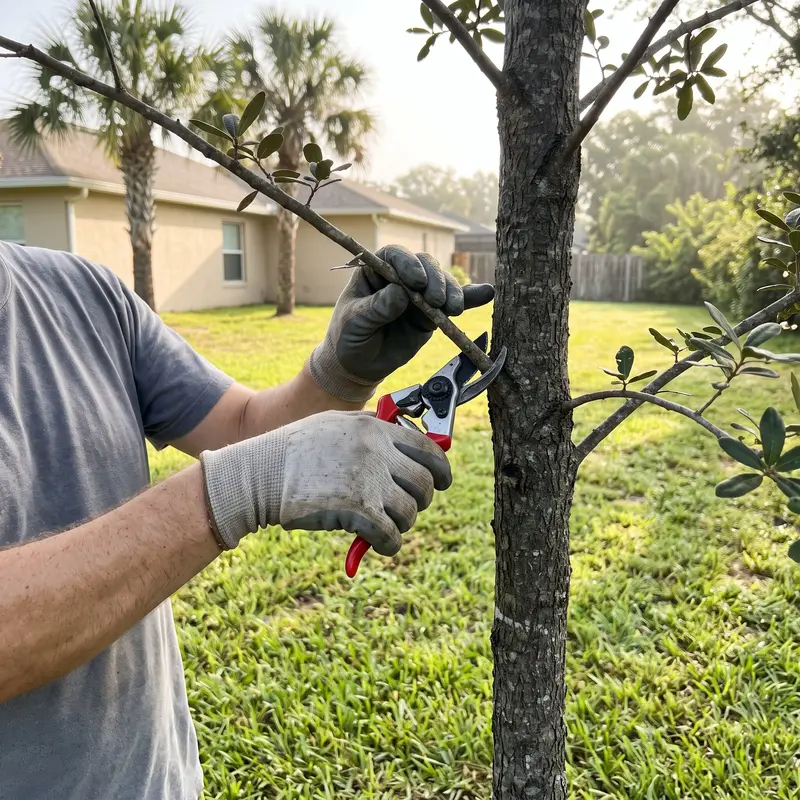
If you can reach the branch standing flat on the ground, and the branch is thinner than your wrist, that's a homeowner job. Grab a clean hand pruner or a small saw. Cut just outside the swollen collar where the branch meets the trunk. Don't leave a stub, and don't cut flush into the trunk either. That's really it. Young trees especially do fine with light shaping from whoever owns them.
Cases where you can skip the crew:
A few dead twigs on a young oak or maple you planted in the last couple years
Low sprouts coming off the base of the trunk, sometimes called suckers
One rubbing branch on a small ornamental tree you can reach without leaving the ground
Hedges and shrubs you're comfortable shaping yourself
Waiting is also a real answer. Central Florida heat is brutal on a freshly cut tree, and June through September is the worst window for anything heavy.
If a tree looks a little shaggy but nothing is dead, cracked, or hanging, you can sit on it until the cooler months. Nobody's tree ever died from being unattractive for a season.
Now the hard line: the second a ladder enters the picture, stop. Same goes for anything near a power line, anything over a roof, and any cut on a limb thicker than about four inches. That's not us protecting our business, that's where people get hurt. We've seen the aftermath of a homeowner and a chainsaw on a ladder more times than we'd like.
And if you're not sure which pile your tree falls in - ask. A two minute look costs you nothing.
Not sure what your Tree trimming & pruning project needs? Ask us.
(407) 221-6533Call now for a free estimate. We're ready to help.
Call NowHow Pricing Works for Tree Trimming and Pruning
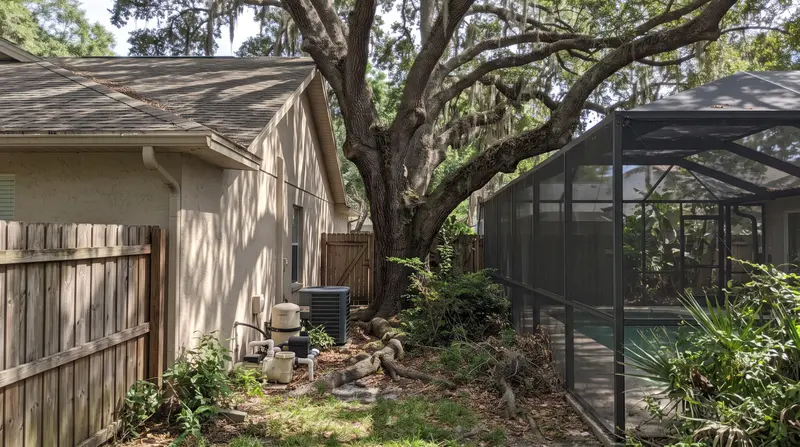
Nobody likes calling about a tree and hearing "it depends." But it really does, and here's the honest reason why. Tree trimming and pruning isn't sold by the hour in most of this trade. It's priced per tree, per job, based on how much risk and labor the tree puts in front of the crew. A small crape myrtle in an open front yard is a different animal than a live oak leaning over a roofline.
So when you get a quote, you're paying for access and difficulty as much as cutting.
Around Orlando, lot layout matters more than folks expect. A lot of our older neighborhoods have big mature oaks planted tight to the house, with fences on both sides and no alley. That access problem is often the single biggest cost factor on the whole job.
Before you hire anyone, ask three things.
What exactly is being cut and why. Is cleanup and haul-off included in the number. And is the company insured for work over your house. A cheap quote that skips proper cuts costs you more later, we see that every season. You're not buying branch removal, you're buying a tree that stays healthy and stays standing.
These are the things that move a price up or down:
Height and spread of the tree, since anything needing a bucket truck or climbing gear takes more crew and more time
What's underneath it. A roof, a pool cage, a fence, or a power line means slow, roped-down cuts instead of free drops
How much wood comes out, because hauling and chipping debris is a real cost line, not a freebie
Species and condition, as a healthy oak prunes differently than a storm-damaged one with cracked limbs
What Happens During a Trimming and Pruning Visit
Most folks picture a truck, a chainsaw, and a lot of noise. The real work is quieter than that. We spend the first stretch of the visit just looking up.
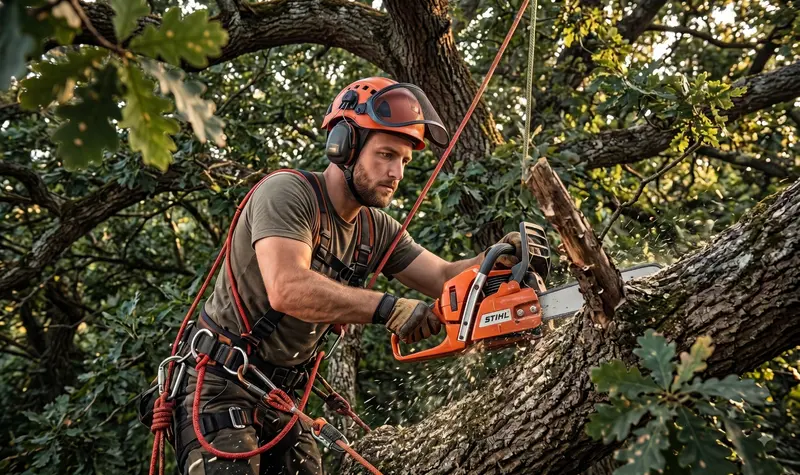
Here's how a typical trimming and pruning visit runs:
We walk the whole tree with you and point out what we see. Deadwood, rubbing limbs, weak attachments, anything hanging over the roof or driveway.
We agree on the plan before anything comes off. You'll know which limbs are going and why.
We set up rigging and drop zones. Ropes on anything that can't free-fall safely near a fence, pool cage, or service line.
We make the cuts at the branch collar, not flush to the trunk and not leaving a long stub. That's the spot the tree can seal over.
We clear the debris and rake down. Branches out, chips swept, driveway blown off.
We do a last look from the street and from under the canopy to check the shape is even.
Now, about how much comes off, not much. A healthy shade tree rarely needs more than a light thinning in a single visit. Strip too much green and you force a flush of weak, fast growth that's worse in a storm than what you started with. So we take the problem limbs and leave the tree enough leaf to feed itself.
Timing matters too. Central Florida's wet season runs roughly June into September (opens in new tab), and that's when soaked soil and gusty afternoon storms do the most damage to an overloaded canopy. We'd rather lighten the sail before those months than clean up after them.
Cleanup is part of the job, not an add-on conversation at the end.
Most single-tree visits wrap in a few hours. Bigger oaks with tight access take longer, and we'll tell you that up front rather than surprise you at 4 p.m. After more than 1000 local homes, we've learned that the yard you walk out to matters almost as much as the cuts.
Frequently Asked Questions
How often should trees be trimmed in Orlando?
Most Orlando trees do well with a trim every one to three years, depending on the species. Fast growers like live oaks push out heavy growth every summer during our rainy season, so they need more frequent attention. Palms need spent fronds removed a few times a year. If you see crossing limbs, dead wood, or branches touching your roof, that's your sign it's time, no matter how long it's been.
What is the best time of year to prune trees in Central Florida?
The cooler months from October through February are best for heavy pruning in Central Florida. Our June through September heat stresses a freshly cut tree, so that's the worst window for major work. Light removal of dead or hanging branches after a storm is fine anytime. If your tree just looks a little shaggy but nothing is broken or dead, it's fine to wait until the weather cools down.
Can I trim my own trees or should I hire a professional?
You can trim your own tree if the branch is thinner than your wrist and you can reach it standing on the ground. Use a clean pruner, cut just outside the swollen collar, and skip anything higher up. The moment a ladder, power line, roofline, or a limb over four inches thick is involved, call a professional. That's where people get hurt, and it's not worth the risk for a branch you can't safely reach.
Do oak trees and palm trees need to be pruned differently?
Yes, oaks and palms need completely different pruning approaches. Oaks heal over wounds, so cuts need to hit the branch collar exactly right, and we thin no more than about a quarter of the living canopy at once. Palms never heal a cut, so we only remove fully brown fronds and old seed stalks, leaving green fronds alone. Stripping a palm's green fronds starves the tree and weakens its crown over time.
How do I know if a tree in my Orlando yard needs trimming?
Look for bare branches on an otherwise full tree, limbs rubbing together, or branches pressing on your roof or gutters. A canopy that's heavier on one side, hanging limbs left over from a storm, or thick moss that never dries out are also warning signs. Orlando's wet summers push fast, soft growth that catches wind hard during afternoon storms, so catching these signs early is safer and easier than waiting for a limb to fail.
Will heavy pruning hurt or kill my tree?
Over-pruning can seriously stress or even kill a tree, which is why we never remove more than about a quarter of a living canopy in one visit. Cutting only the interior and leaving weight at the branch tips is a common mistake that makes wind damage worse, not better. Proper thinning that spreads cuts through the whole canopy keeps the tree balanced and healthy while still reducing storm risk.