Tree Removal in Orlando: Know When It's Really Necessary
Signs a Tree Needs to Come Down
A tree may need removal when it's dead, badly decayed, leaning in a new way, or damaged at the trunk or roots. Many trees that look rough can still be saved with good care. The real question is whether the tree can stand safely near your home and family.
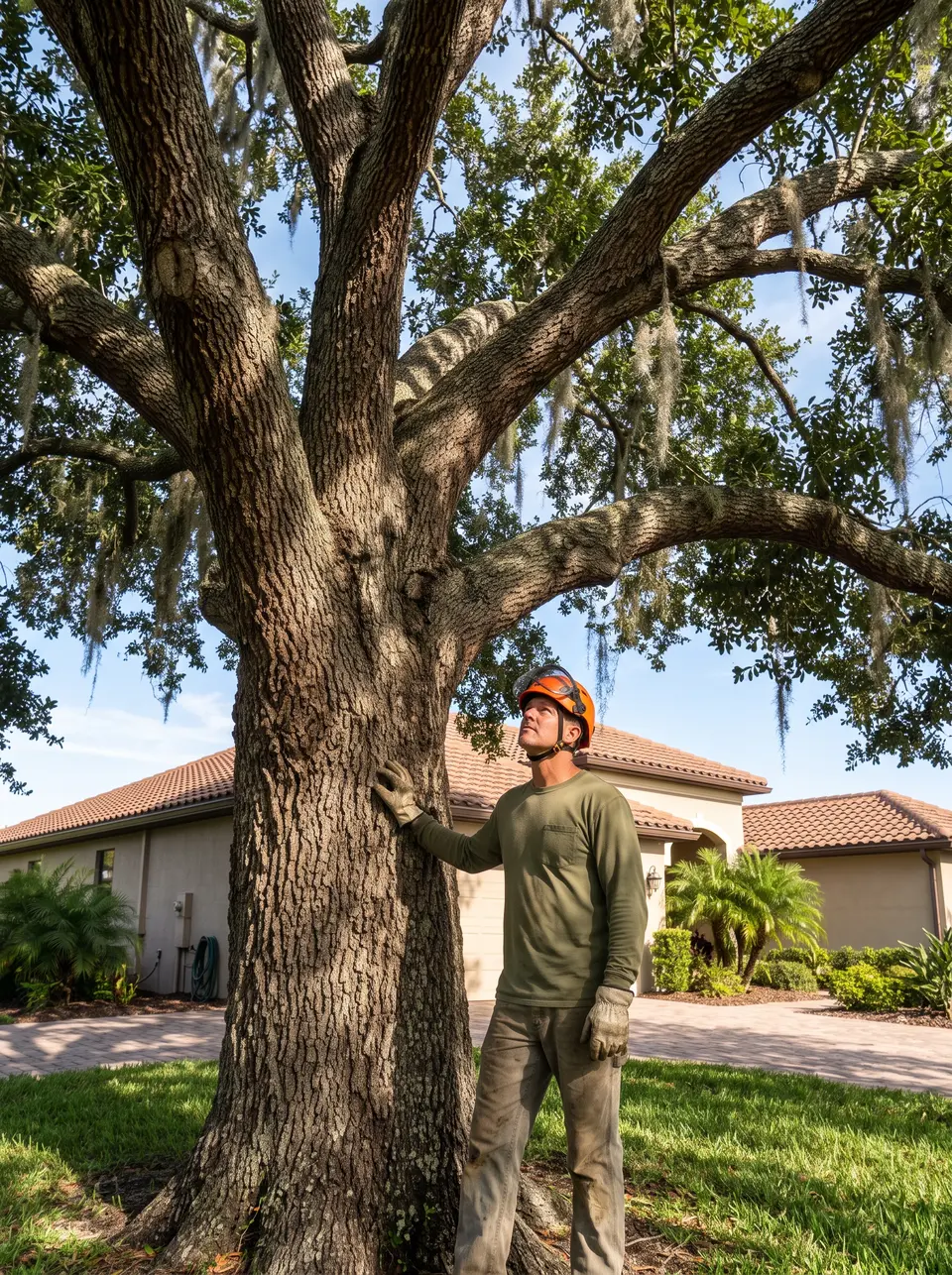
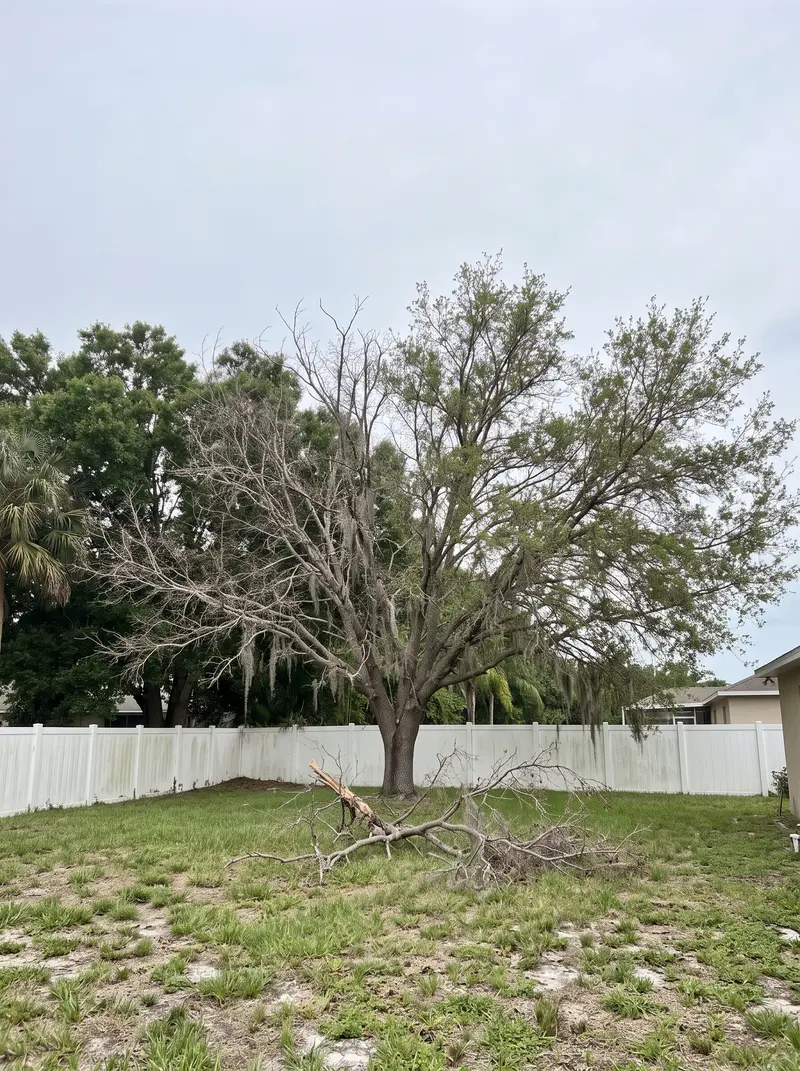
Most people call us because something about a tree just feels off. That gut feeling is worth listening to. Here are the signs that tell you a tree may be past saving, and the ones that usually don't.
Large dead sections. If half the canopy stays bare when other trees leaf out, or big limbs snap off dry and gray, the tree may be dying from the inside.
Cracks or splits in the trunk. A deep crack, especially where two big trunks meet, can open wider in wind and let the tree fall apart.
Hollow spots and rot. Soft, crumbly wood, holes in the trunk, or mushrooms growing at the base can mean decay that you can't see from the outside.
A new or worsening lean. Some trees grow with a lean their whole lives. A lean that shows up after a storm, with soil heaving or roots lifting on one side, is a different story.
Root damage. Roots cut for a driveway, pool, or sewer line can weaken a tree's hold on the ground years later.
Branches over the roof or power lines that are already cracked or hanging. Weight plus wind is a bad mix.
Orlando adds its own pressure. Our sandy soil doesn't grip roots the way heavier soil does. When summer storms soak the ground and hurricane winds push on a full canopy, a weak tree has less to hold onto. A tree that limped along through dry months can come down fast once the rainy season sets in. That's why we'd rather look at a worrying tree before storm season than after.
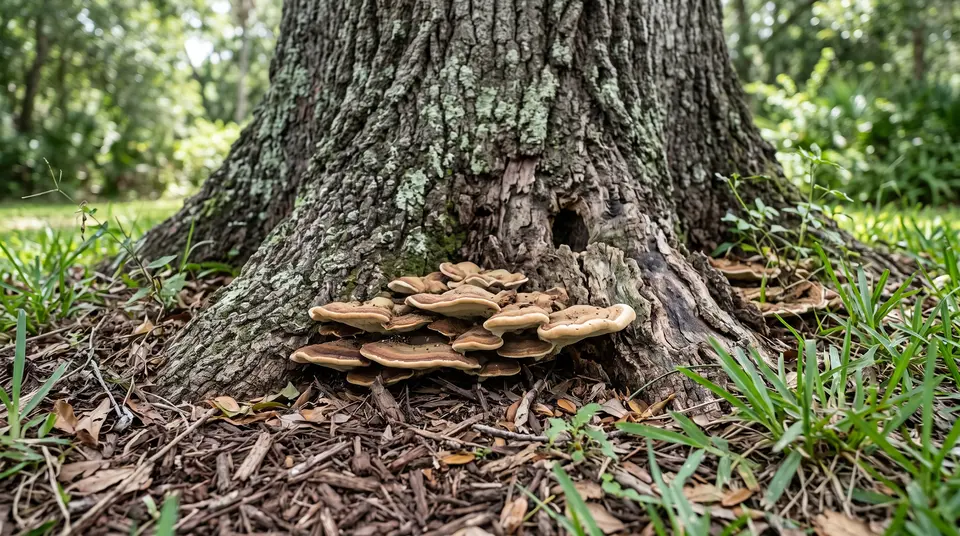
Picture this. You notice a few mushrooms at the base of your big oak, and the bark near the ground sounds hollow when you tap it. The leaves still look green up top. That tree might seem fine, but the problem is down low where it holds itself up. Green leaves don't always mean a strong trunk.
Now for the honest part. A lot of trees that worry people don't need to come down at all. Thinning leaves, a few dead branches, or limbs reaching too close to the house can often be fixed with our tree trimming and pruning service. Storm damage to one or two limbs usually means cleanup, not removal. And if a tree has always leaned a little and the ground around it hasn't shifted, it may be just fine.
We care about keeping healthy trees standing.
Trees shade your home, cool your yard, and make a neighborhood feel like home. So when we look at a tree, we're asking one thing first: can it stay safely? If the answer is yes, we'll tell you. If the answer is no, removal is the kindest choice for your home and the people around it.
If you see more than one of the signs above on the same tree, don't wait for the next big storm to decide for you. Get a trained set of eyes on it.
When Your Tree Does Not Need to Be Removed
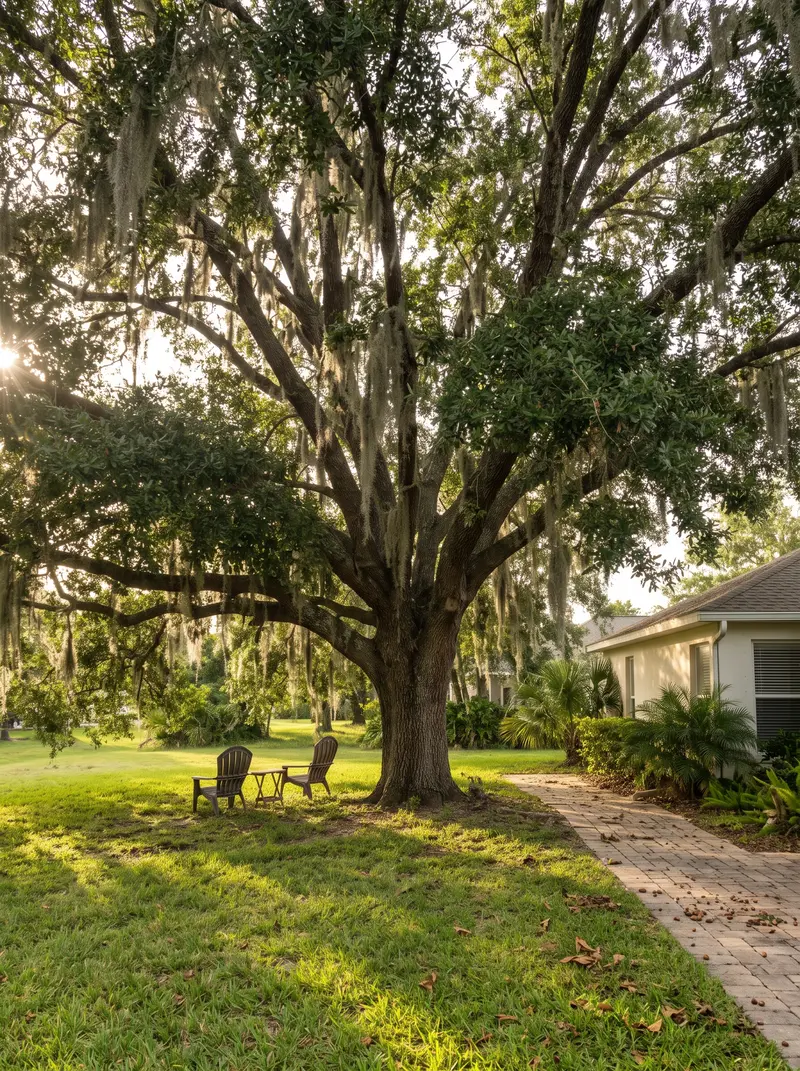
Some trees bug us without being a danger. That's a real difference, and it matters before you take out a tree that took decades to grow. Here are the common worries that usually don't call for removal.
It's messy. Acorns on the driveway, leaves in the pool, and needles in the gutters are a pain. But a mess isn't a safety problem. A healthy tree that drops a lot of stuff is still a healthy tree. Shade on a hot Orlando afternoon is worth a few extra weekends with a rake.
It's covered in gray moss or crusty spots. Spanish moss hangs from the branches but doesn't feed on the tree. It just uses it as a perch. The flat, crusty patches you sometimes see on bark are usually lichen, and they're harmless too. If moss gets heavy enough to block light or weigh down small limbs, our moss removal service can thin it out. The tree itself can stay.
Your oak dropped its leaves in spring. Live oaks are common around Orlando, and they shed old leaves late in winter or early in spring while new ones push out. For a few weeks the tree can look thin and sad. That's normal. If new green leaves fill in soon after, the tree is doing what it's supposed to do.
Your palm has brown fronds. Palms brown out their lower fronds as they grow. A few dead ones at the bottom don't mean the palm is dying. What's worth a closer look is the top, where new growth comes from. If the center looks green and healthy, the palm probably just needs a tidy-up through our palm tree care.
A neighbor's tree fell, so now you're nervous about yours. That feeling makes sense. But one tree falling doesn't mean another one will. Every tree has its own roots, its own wood, and its own history. Judge your tree by its own signs, not by what happened next door.
Sometimes the right answer is to wait. After a rough storm, a tree can lose a lot of leaves from wind and stress and still bounce back. Give it a few weeks. Watch for new growth on the branches. A tree that leafs out again is telling you it's still alive. Making a big decision the day after a storm can cost you a good tree.
There are also small jobs you can handle yourself:
- Picking up small fallen twigs and leaves after a storm
- Snipping low, thin branches you can reach from the ground with hand pruners
- Keeping mulch a few inches away from the trunk so the bark can stay dry
- Raking and bagging seasonal leaf drop
Leave anything that needs a ladder, a chainsaw, or work near power lines to a trained crew. If storm limbs are too big to move, our tree debris and branch removal service can clear them without touching the tree.
The bottom line is simple. A tree should come down because it's unsafe, not because it's inconvenient. If your only complaint is mess, moss, or a scary few weeks of bare branches, your tree most likely has a lot of good years left.
Storm and Hurricane Damage That Can't Wait
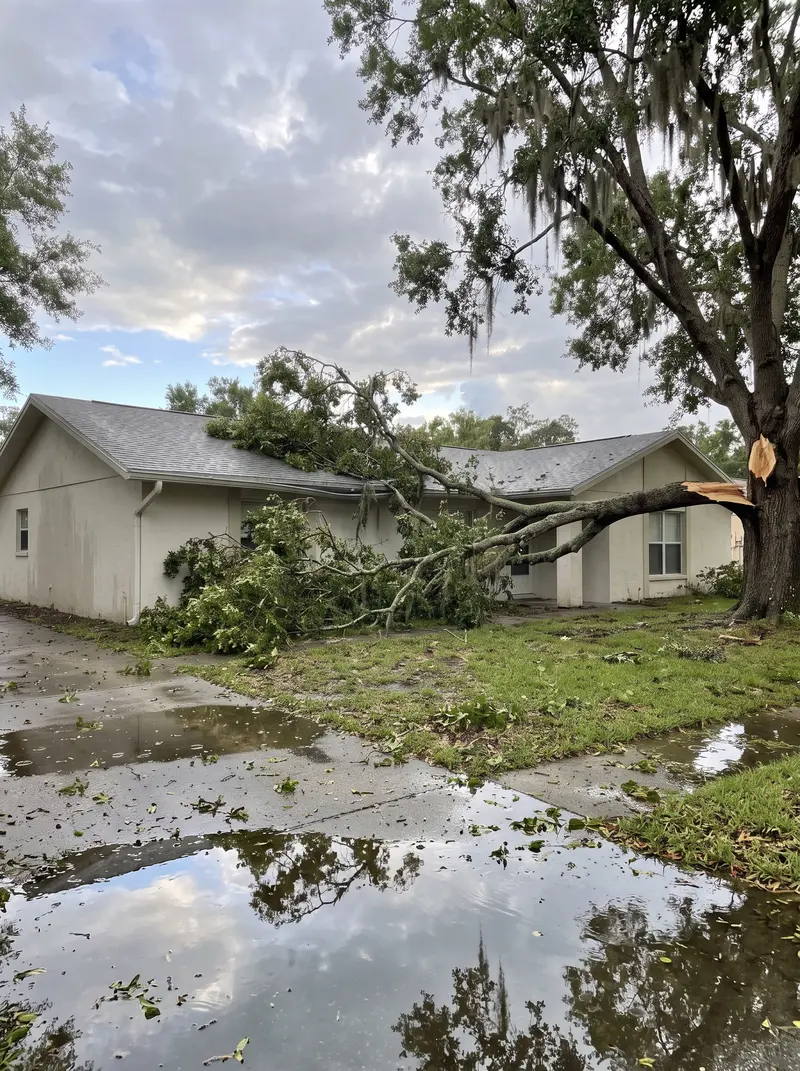
After a big storm, every tree in the yard can look like an emergency. Most aren't. But a few kinds of damage really can't sit until next week. Here's how to tell them apart.
These are the ones to treat as urgent:
A tree or big limb is resting on your roof, car, fence, or shed. Even if it looks settled, the weight can shift and do more damage, and you can't safely live with it there.
A large limb is snapped but still hanging up in the canopy. A broken branch caught in other branches can drop without warning, often on the next windy afternoon.
The trunk has split open, or a whole section of the tree has torn away. What's left is often lopsided and much weaker than it looks.
The tree is leaning toward your house, and the soil on the other side has lifted or cracked open. That's a tree that's lost its grip and may still be moving.
Branches or a trunk are touching or tangled in power lines.
A fallen tree is blocking your driveway or the only safe way in and out of your home.
If you see any of these, keep people and pets well away from the tree and everything under it. Don't climb up, don't start cutting, and don't try to pull a limb down yourself. Storm-damaged wood is under tension in ways you can't see. A cut in the wrong spot can make a trunk spring sideways or a limb kick back hard. That's how a lot of people get hurt after storms, long after the wind has stopped.
Power lines are their own case. If a tree is touching a line, call your power company first. Treat every line as live, even if your lights are out. Tree work near lines has to wait until the utility says it's safe.
Orlando storms are hard on trees for a simple reason. The rain comes first, then the wind. Soaked sandy ground can't hold roots well, so a tree that rode out the first gusts can tip hours later. If a tree has started to lean during or after a storm, keep watching it. A lean that grows over a day or two is a warning you shouldn't ignore.
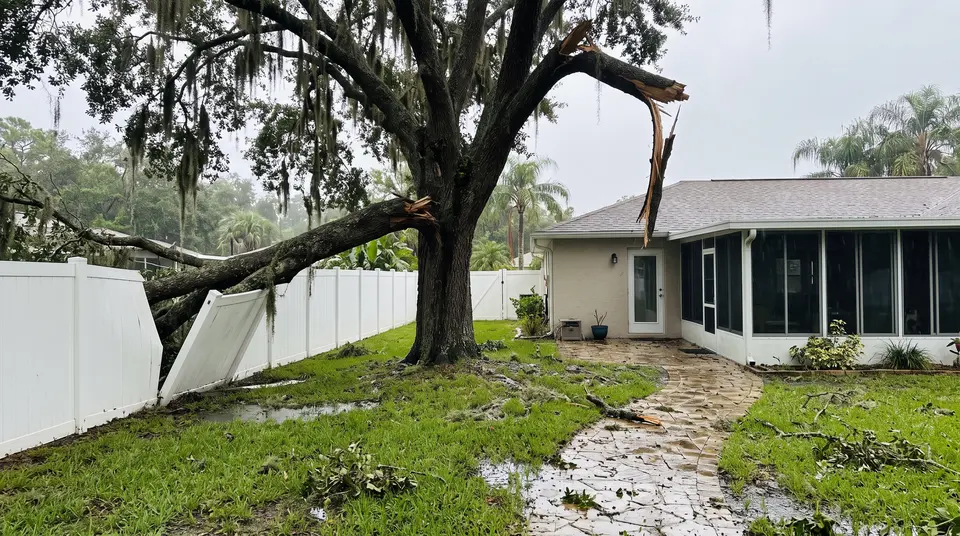
Here's what that can look like. The morning after a summer storm, you walk outside and see a long oak limb lying across the fence. Higher up, there's a second limb, cracked and hanging from a thin strip of bark right over the path to your back door. The limb on the ground can wait. The one still hanging can't.
That's the real goal of storm work. It's not about clearing every branch the same day. It's about getting the dangerous pieces down first, so you and your neighbors can move around safely. Once those are handled, the rest is cleanup, and a tree that only lost leaves or a few small limbs often deserves time to recover, as we covered above.
Our tree emergency and storm cleanup service is there for these moments, whether that means removing a tree that's come down or just making a damaged one safe again.
Not sure what your Tree removal project needs? Ask us.
(407) 221-6533Call now for a free estimate. We're ready to help.
Call NowOrlando's Tree Removal Permit Rules
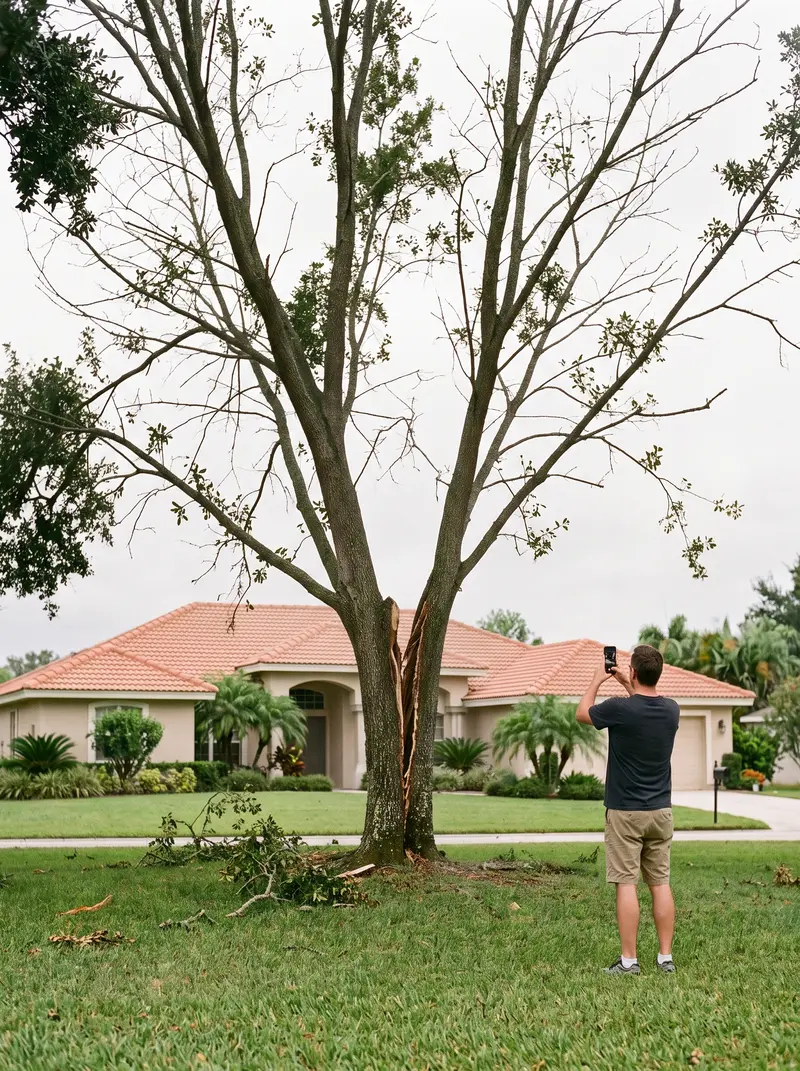
Before a tree comes down, it's worth asking one more question. Who else gets a say? In Orlando, the answer can be the city, the county, your HOA, or nobody at all. It depends on where you live and why the tree is coming out.
Start with your address. Plenty of homes have an Orlando mailing address but sit in unincorporated Orange County, not inside the City of Orlando. Others sit right on the line with places like Winter Park. Each has its own tree rules, so the first step is finding out which one covers your yard. Your property tax record or a quick call to the city will tell you.
If you're inside city limits, the City of Orlando has tree protection rules for private property (opens in new tab). Some removals need a permit, and bigger or certain kinds of trees may get more protection. The city can also ask for a replacement tree in some cases. The rules change from time to time, so check with the city's permitting office before work starts, not after the stump is gone.
There's one big exception homeowners should know about.
Florida law (opens in new tab) limits when a local government can require a permit to remove a tree on residential property if that tree is a danger to people or property. To use it, you need that danger in writing from a certified arborist or a licensed landscape architect. This lines up with everything above. When a tree truly has to come down for safety, there's a clear path for it. When it's just messy or inconvenient, the normal rules apply.
Keep that written assessment somewhere safe. If a neighbor, your HOA, or the city asks about the tree later, it shows why the tree came out.
Your HOA is a separate layer. Even when the city doesn't need a permit, many neighborhood associations want you to ask first, and some have rules about replanting. A quick email to your HOA before work begins can save you a letter and a fine later.
Storms change the timing, but not the need to keep a record. If a tree has already fallen or is clearly about to, safety comes first. Take clear photos of the damage before anything is moved. Those pictures help with the city, your HOA, and your insurance company.
Here's what this looks like in real life. Say your big laurel oak has a split trunk right over the bedroom. You live inside the city, and your HOA has a tree policy. Before anyone starts cutting, you'd want three things in hand:
Confirmation of whether your lot falls under the City of Orlando or Orange County rules
Written notes from a certified arborist or licensed landscape architect if you're removing the tree because it's dangerous
Your HOA’s approval, if your association requires it
When you talk to any tree company, ask who's checking the permit question and who's handling the paperwork. Get a clear answer before the job is scheduled.
A good crew won't mind the question, and you'll sleep better knowing the tree came down the right way.
What's Included in a Tree Removal Job
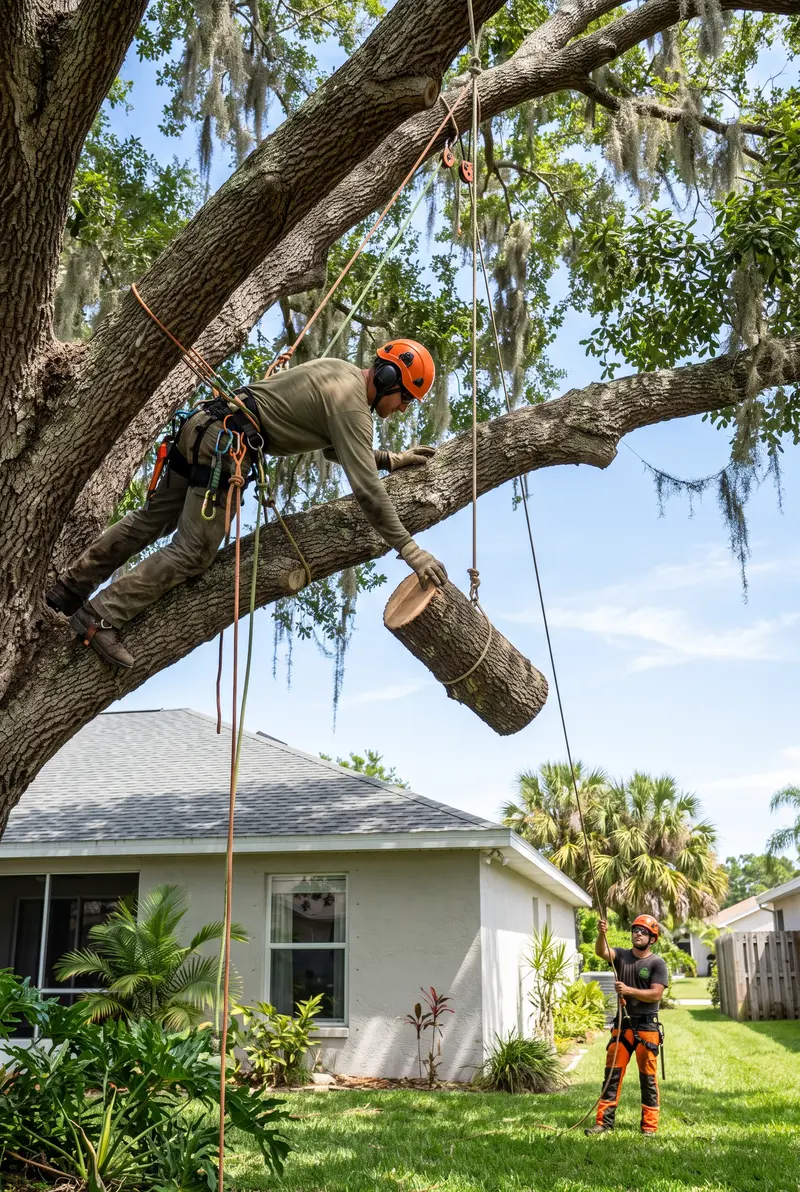
Once you know a tree has to come down, the next question is simple. What does the job cover? Tree removal can mean very different things from one quote to the next. Knowing the pieces helps you compare quotes fairly and avoid a surprise on the last day.
A full removal usually includes these parts:
A look at the tree and the space around it. The crew checks where the tree can safely fall or be lowered, and what's underneath it.
Taking the tree down. In an open yard, a tree can sometimes come down in one piece. Near a roof, fence, pool, or power line, it's often taken apart from the top down in smaller sections.
Cutting up the wood and brush. Limbs get cut into pieces that can be carried or chipped.
Hauling it away. Some quotes include taking all the wood. Others leave the logs for you.
Cleanup. Raking up sawdust, twigs, and leaves so your yard doesn't look like a storm just passed.
The stump is the piece people forget to ask about. Cutting a tree down usually leaves a stump a few inches above the ground. Getting rid of it is often a separate step, and some quotes leave it out. Our stump grinding service takes it down below the surface so you can replant, lay sod, or just mow over the spot.
If you want to keep some of the wood for a fire pit or a garden border, say so up front. It's much easier to set logs aside during the job than to sort them out after.
Cost depends on the tree and the yard, not just height. Here's what usually pushes the price up or down:
- Size. Taller trees with wide canopies take more time and more cuts.
- What's nearby. A tree over your house or near power lines needs slow, careful work. One standing alone in an open lot is simpler.
- Access. If equipment can't reach the tree, more of the work is done by hand and carried out.
- The tree's condition. Dead or rotting wood can break in unexpected ways, so it often takes extra care.
- Extras. Stump grinding, hauling every log, and permit paperwork can each add to the total.
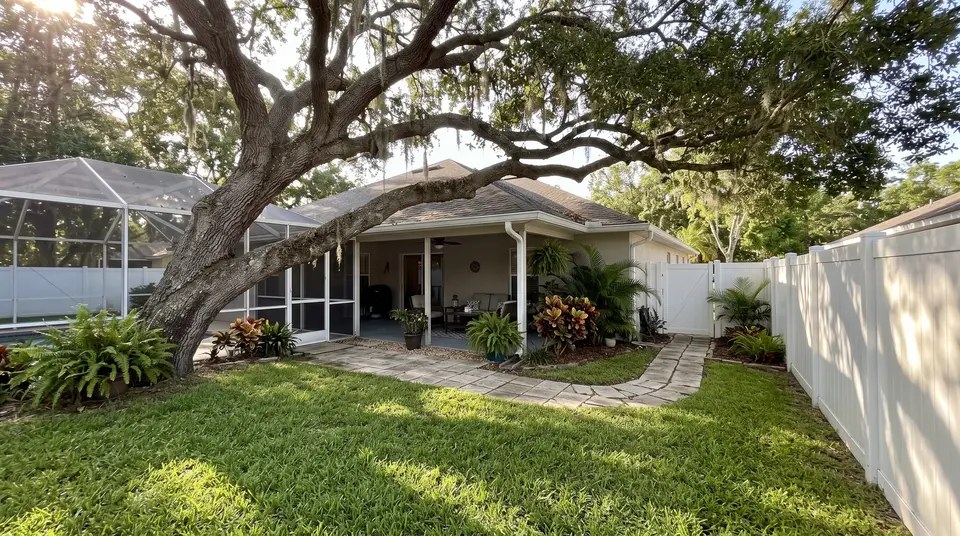
Here's a common example. Two neighbors each get a quote for an oak of about the same size. One oak stands in an open front yard. The other leans over a back porch inside a fenced yard with a narrow gate. The second job will likely cost more. That's not because the tree is bigger. It's because it has to come down slowly, in pieces, without touching the house.
Before you agree to any quote, ask these questions:
Is the stump included, or is it priced separately?
Do you haul away all the wood and brush, or leave some behind?
What will the yard look like when you're done?
Are you insured for work near homes and power lines?
Who's handling the permit question we talked about above?
Clear answers protect you. A careful crew should be happy to walk you through every step, because a safe job and a clear job go together. If you're weighing a removal, tell us about your tree and we'll help you understand what the job should include.
Frequently Asked Questions
What makes one tree removal cost more than another in Orlando?
Size, access, and what's around the tree drive the cost, not just height. A tree leaning over a roof or power line takes longer because crews have to take it down slowly in pieces. A tree in an open yard with easy access is simpler and faster to remove. Dead or rotting wood also adds time since it can break in unexpected ways.
Do I need a permit to remove a tree in Florida?
It depends on where your property sits and why the tree is coming down. Homes inside Orlando city limits may need a permit, while unincorporated Orange County has its own rules. Florida law also lets you skip the permit if a certified arborist or licensed landscape architect states in writing that the tree is a danger to people or property. Checking with the city's permitting office before work starts is the safest first step.
Is stump removal part of a tree removal job?
Not always, so it's worth asking before you book. Cutting a tree down typically leaves a stump a few inches above the ground, and getting rid of it is often a separate step. If you want the area ready for replanting or sod, ask whether stump grinding is included in your quote.