
Tree Emergency and Storm Cleanup in Orlando
Know When a Fallen or Leaning Tree Is a True Emergency
A tree is a true emergency when it touches a power line, sits on your home or car, blocks the only way in or out, or is leaning more after a storm with the soil lifting around the base. If nobody's at risk and nothing's being damaged, it can usually wait a day or two for a calm, planned cleanup. Knowing the difference keeps you safe and helps you avoid paying for rush work you don't need.
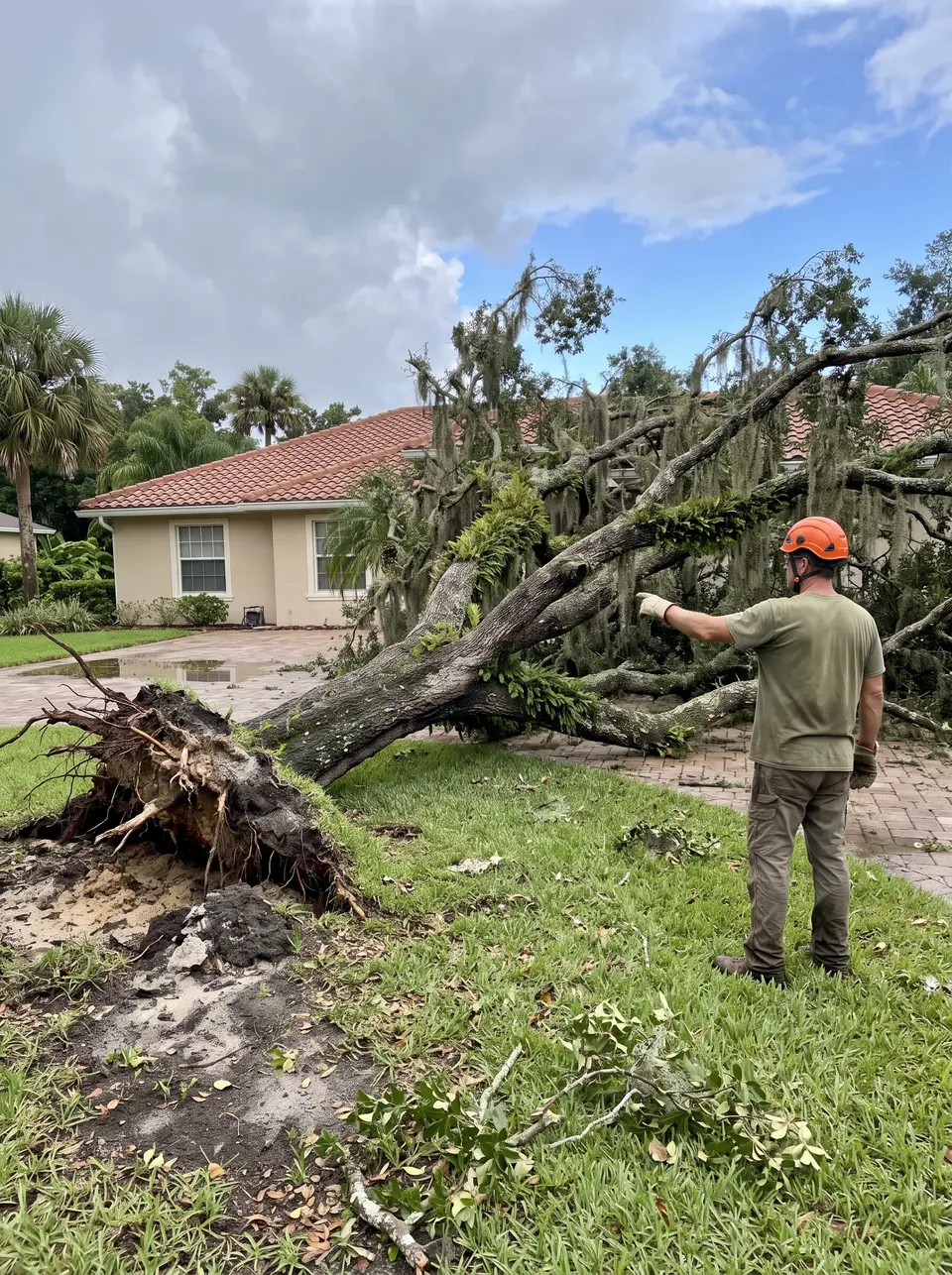
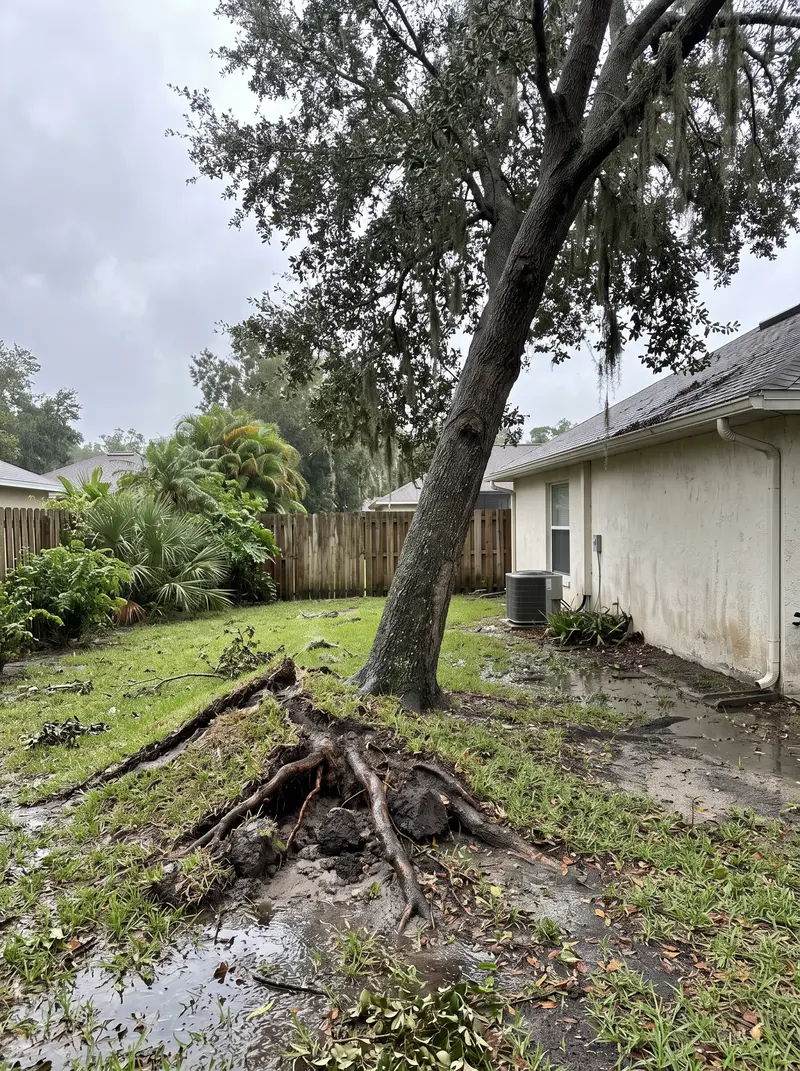
After a big storm rolls through Orlando, it's easy to feel like every branch in the yard needs help right now. Most of the time, it doesn't. What matters is whether the tree is putting a person, a home, or a way out at risk. If it is, act fast. If it isn't, take a breath. You've got time to plan.
A tree or limb is touching or tangled in a power line. Stay far away, keep kids and pets inside, and call your power company first. Don't try to move anything near a line yourself.
A tree has landed on your roof, and you can see a hole, a sagging spot, or water coming in.
A trunk or big limb is resting on a car, fence, or shed and could shift or roll.
A fallen tree blocks your driveway or street, and you'd have no way out if you needed one.
A tree is leaning more than it did before the storm, and the soil on one side is cracked or lifted up.
A large limb is hanging loose high in the tree, caught on other branches, right over a spot where people walk.
That last one catches a lot of people off guard. A broken limb still stuck up in the canopy can look harmless. But wind, rain, or even a light bump can bring it down without warning. If it's over a sidewalk, a patio, or your kids' play area, treat it like an emergency and keep everyone clear of it.
Leaning trees need a closer look. Plenty of trees grow with a lean their whole lives, and that's fine. The worry is a new lean or one that's getting worse. Walk around the base and look at the ground. Is the soil cracked, raised, or pulling up on one side? Can you see roots that were buried before? After days of heavy rain, soaked ground can loosen its grip on the roots. A tree that's shifting in wet soil can go over in the next gust.
Now for the good news. A lot of storm damage isn't urgent. Small branches all over the lawn, a limb that fell in an open part of the yard, or a tree that came down along the back fence line without hitting anything can all wait. It's okay to pick up small sticks and light debris yourself if you feel up to it. Just leave anything heavy, anything under tension, and anything near a line to someone with the right gear and training.
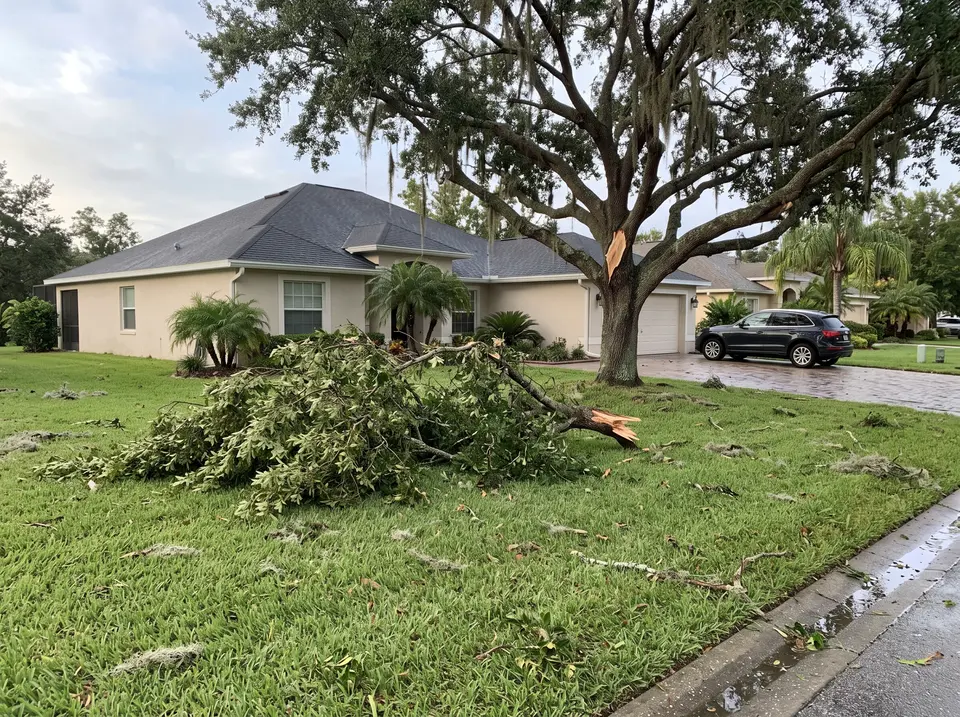
Picture this. You step outside the morning after a storm. There's a big oak limb across the grass and leaves everywhere. The house is fine. The driveway is clear. Nothing is sparking or leaning. That's a cleanup, not an emergency. Take some photos for your records, keep the kids back from the pile, and schedule a visit when it works for you. Now picture the same limb, but it's resting against your gutter and the tree it came from is tilting toward the house. That one needs a call today.
If you're not sure which one you're looking at, err on the side of safety. Keep people away from the tree and get a trained eye on it before anyone climbs, cuts, or pulls.
Call Immediately If a Tree Is Touching Power Lines or a Structure
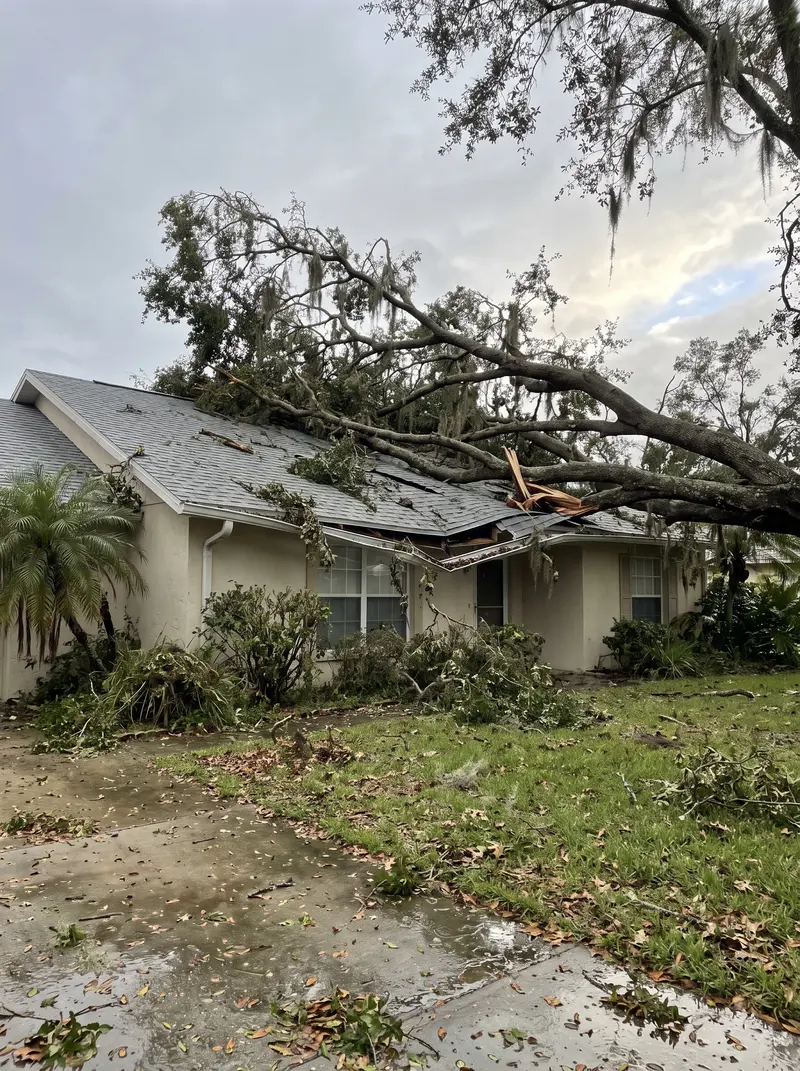
If a tree is on a power line or on your house, don't wait to see what happens. Make the calls right away. These two situations can get worse fast, and the fix isn't something to try on your own.
Power lines come first. Treat every downed or touched line as live, even if the lights in your house are out. A wet tree can carry electricity, and so can the soggy ground around it. That's why the power company gets the first call. Tree work near lines is a job for crews trained for it, and in most cases the utility has to make the line safe before anyone else can touch the tree. Once they've done that, we can come clear the wood and debris.
When the tree is on your home, the danger is a little different. It's about weight and tension. A big trunk resting on a roof is pressing down, and branches bent under it are loaded like springs. Pull or cut the wrong piece, and the tree can drop, roll, or snap back hard. That's how a dented roof turns into a caved-in one, or how someone gets hurt. Taking a tree off a structure is careful work. It usually comes down in small, controlled pieces so the house doesn't take another hit.
While you wait for help, here's what you can do to keep your family safe and make the next steps easier.
- Get everyone out of the rooms under or near the damage, and keep them out.
- Keep kids and pets well away from the tree, the yard around it, and any lines.
- Don't climb on the roof or up a ladder to look. Check from the ground.
- Take photos and short videos from a safe distance. Get the tree, the damage, and any water coming in.
- Call your insurance company to start a claim. Your photos will help.
- Write down where the tree is touching the house and anything you hear, like cracking or creaking.
When you call us, share what you've seen. Is the tree touching a line? Where is it resting? Is water getting in? Is the driveway blocked?
Those details help our team plan before we show up, and they help us tell you what needs to happen now and what can wait.
In Orlando, this matters most from June through November, when hurricane season (opens in new tab) lines up with our heavy summer storms. Trees get hit again and again, and ground that's already soaked can't hold roots as well. A tree that leaned into your gutter on Tuesday could be through the roof after Thursday's storm. That's why a tree on a structure is never a wait-and-see problem.
You don't have to figure it out alone.
Our team has helped more than 1000 local homes, and we know how scary it is to hear a tree hit the house. Once the power company has made the lines safe, we'll help you get the tree off your home and your yard back in order.
Skip the Emergency Call for Cosmetic Storm Debris
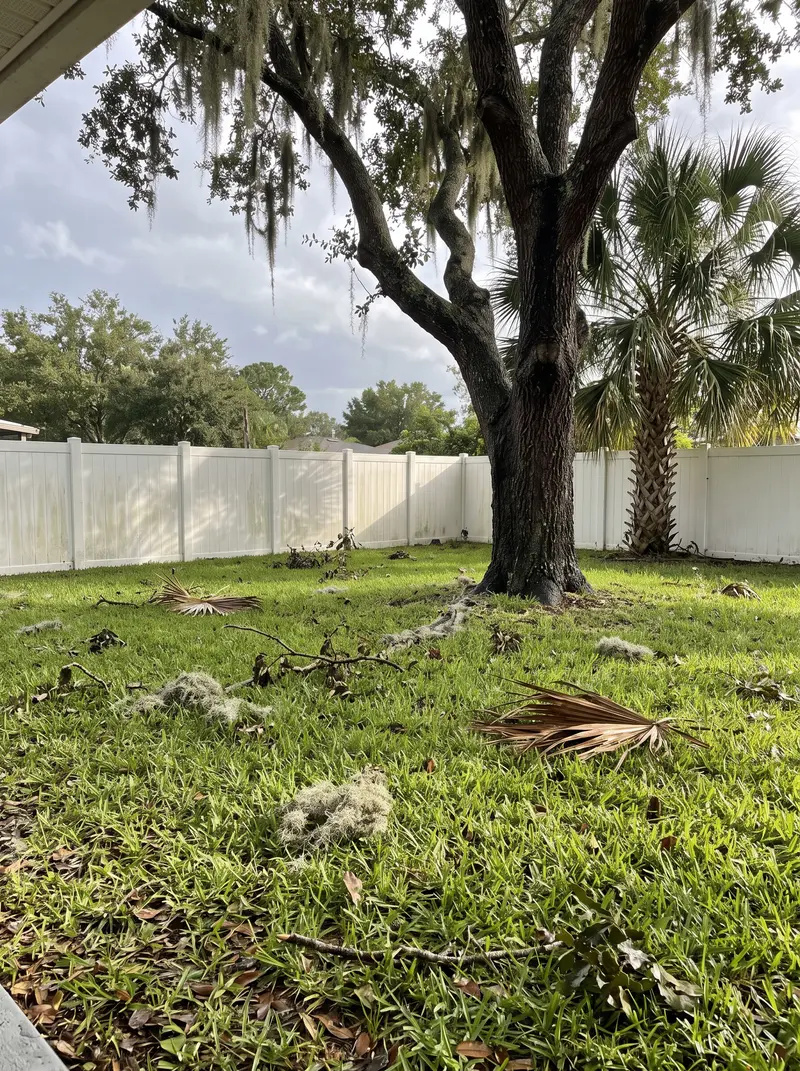
If a storm left your yard messy but nothing is hurt, blocked, or leaning, you don't need an emergency crew. You need a cleanup. That's a normal visit you can plan for a day that works for you. Saving the emergency call for real danger keeps you from paying rush rates for work that can wait.
Here's what usually counts as cosmetic storm debris:
Leaves, twigs, and small sticks scattered across the lawn or driveway.
Palm fronds that dropped onto the grass, the pool deck, or the lanai.
Clumps of Spanish moss knocked loose from oaks.
A limb that fell in an open part of the yard and didn't hit anything.
A small tree or shrub that tipped over in a garden bed, away from the house.
Branch tips that snapped off and left the canopy looking a little ragged.
None of these put your family or home at risk. They look bad, and they're a pain to deal with, but they're not going anywhere. The one exception is a broken limb still stuck up in the tree over a walkway, which we covered above. That one isn't cosmetic, even if it looks small.
Why wait? Across the tree care industry, same-day and after-hours storm work usually costs more than a scheduled visit. After a big storm, crews are also stretched thin helping homes with trees on roofs and lines. When your job is a pile of branches, a planned visit a few days out is often easier on your wallet and gets the same result.
While you wait, a few easy steps help:
- Snap a few photos of the yard for your records.
- Pick up light sticks and fronds you can carry with one hand, if you feel up to it.
- Stack what you gather in one spot, away from the street and storm drains.
- Leave heavier limbs where they are for someone with the right tools.
Take one more look at your trees after the next rain. Cosmetic damage should stay cosmetic. If you notice a new lean, cracked soil at the base, or a split you didn't see before, it's no longer just a mess. Treat it the way we described in the first section.
When you're ready for help with the leftovers, our Tree Debris & Branch Removal service can haul off the piles. If your hedges or shrubs got beaten up, Hedge and Shrub Trimming can tidy them. For torn branch ends up in the canopy, Tree trimming & pruning helps the tree heal cleanly instead of leaving ragged breaks.
What Happens During an Emergency Tree and Storm Cleanup Visit
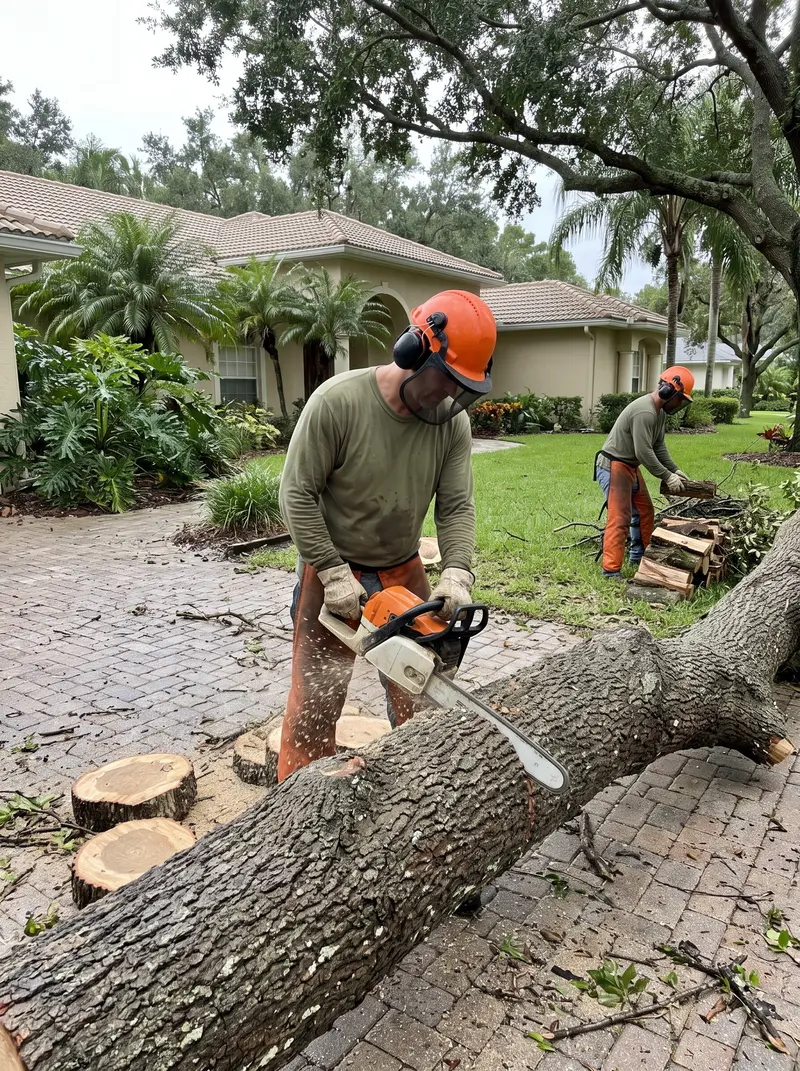
Knowing what to expect makes a hard day a little easier. Every storm job is different, but emergency tree work across the industry tends to follow the same basic order. First make it safe, then take the weight off, then clean up. Here's how that usually plays out.
A look from the ground. The crew walks around the site and checks where the tree is resting, what’s holding its weight, and whether any lines are involved. This is where your photos and notes really help.
Making the area safe. People, pets, and cars get moved back, and the work zone gets marked off so nobody wanders under the tree.
Taking the weight off. As we covered above, a tree on a structure comes down in small, controlled pieces, usually starting from the top and outer branches.
Clearing your way in and out. Driveways, doors, and walkways usually come first, so you can get to work, school, or help if you need it.
Cleaning up. Wood gets cut into smaller pieces, brush gets hauled or stacked, and the yard gets raked of the worst mess.
Talking through what’s left. That can mean a stump, a damaged tree that’s still standing, or limbs that should come off before the next storm.
Sometimes the work happens in two trips. The first one handles the danger, like a tree on the roof or a blocked driveway. The second one takes care of the rest of the cleanup. After a big storm, when a lot of homes need help at once, that split is common. It gets the risky part done fast without rushing the rest.
In Orlando, timing matters during hurricane season. Another storm may be only days away, and soaked ground is already loosening roots. That's why hanging limbs and leaning trees near your home should come down first, even if the yard still looks rough for a bit.
Before the crew arrives:
- Move cars out of the driveway if it’s safe to do so.
- Keep kids and pets inside.
- Unlock side gates so the crew can reach the backyard.
- Keep your phone close in case there’s a question.
Cost is a fair thing to wonder about. Across the tree care industry, storm work is priced by the job, not by a set rate. The size of the tree, how it's resting, how easy it is to reach, whether it's on a house, how much wood needs hauling, and after-hours timing all push the price up or down.
Before work starts, it's smart to ask what's included.
Does the price cover haul-away?
Is the stump part of it?
Will you get the estimate in writing?
If a stump is left behind, our Tree stump grinding service can take care of it later. Storm-battered palms can get help through Palm Tree Care.
Have a tree down right now?
Call Now (407) 221-6533Document Damage Before Cleanup for Insurance Purposes
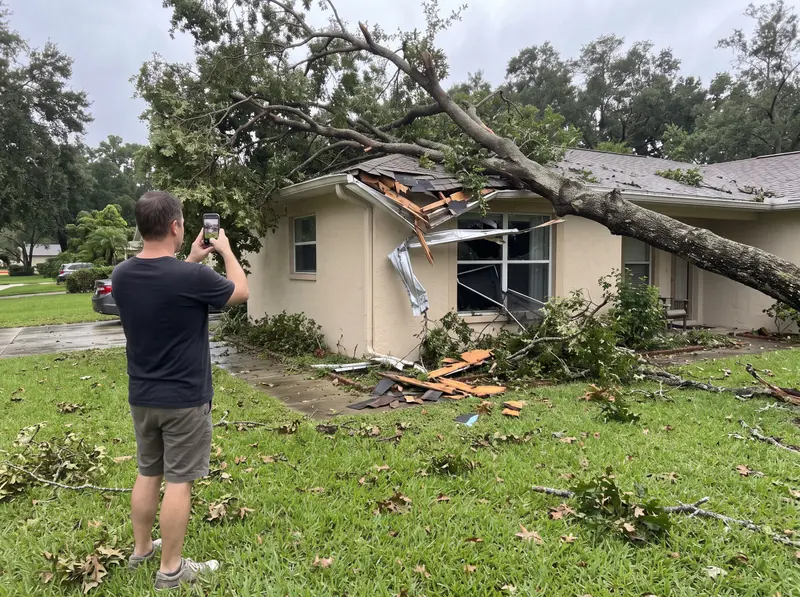
Before a single branch gets cut or hauled away, get a clear record of the damage. Once the tree is off the roof and the yard is raked, the proof is gone. Good photos, videos, and notes make it much easier to show your insurance company what happened and what it cost to fix.
We've already mentioned snapping a few photos from a safe spot. Here's how to make those photos useful. Think of it like telling the story of the storm to someone who wasn't there.
Wide shots first. Stand back and show the whole tree, the house, and the yard in one frame so it’s clear where everything landed.
Then move closer. Get the spot where the tree meets the roof, fence, car, or shed, plus any dents, cracks, or broken screens.
Show the base of the tree. Photos of the trunk, the roots, and any lifted soil help explain why it fell.
Film a slow walk-around video. Talk as you go and say what you see. It’s easy to do on a phone.
Get the inside too. Water stains, drips, or a sagging ceiling under the damaged area all belong in the record.
Include a date. Most phones save it automatically, but you can also hold up a note or say the date in your video.
Stay on the ground while you do this. No ladders, no roof, and no stepping under hanging limbs just to get a better angle. A zoomed-in photo from a safe spot is plenty.
What if the tree has to come off the house right away to stop more damage? That's okay. Keeping your home safe comes first, and insurers generally expect you to take reasonable steps to prevent things from getting worse. Just take your photos before the work starts, and keep records of anything you do to protect the house, like a tarp over a hole in the roof.
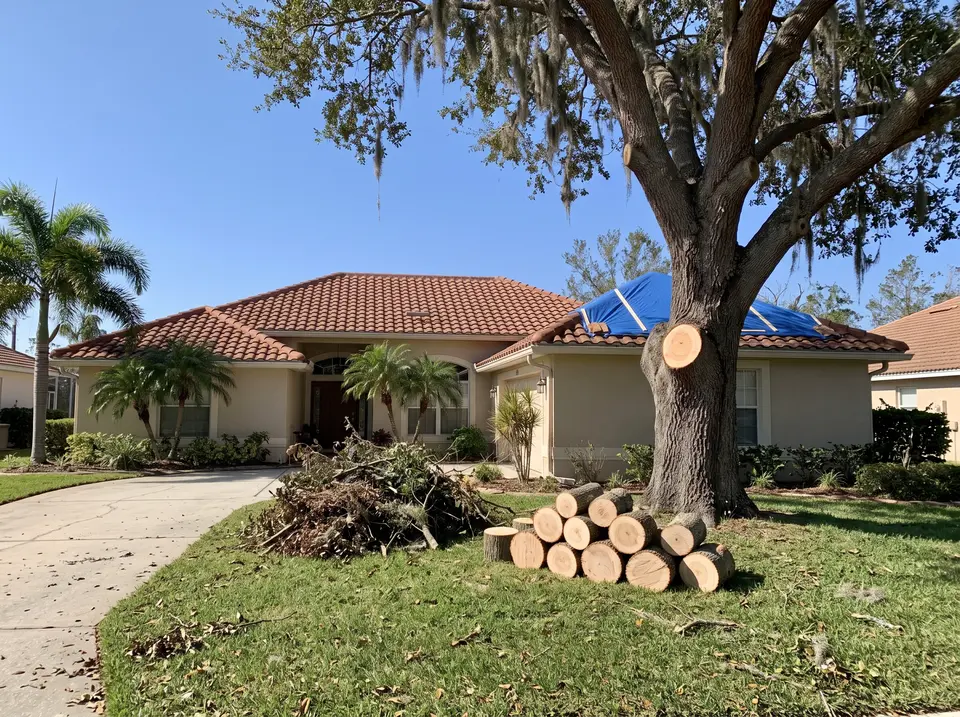
Paperwork matters as much as pictures. Save your written estimate, your final invoice, and any receipts for tarps, plastic, or supplies. Write down the date and time the tree fell, who you called, and what they told you. Keep it all in one folder or one spot on your phone so you're not digging for it later.
Every policy is different, so ask your insurance company a few simple questions (opens in new tab) before cleanup if you can. Does your plan help with tree removal when a tree hits the house? Is there help if a tree falls in the yard without hitting anything? Do they want to send someone out first, or are your photos enough? In Orlando, a busy hurricane season can mean lots of claims at once, so a clear, complete record can help keep yours moving.
Storm damage at your place? Ask us what needs to happen now.
(407) 221-6533Call now for a free estimate. We're ready to help.
Call NowFrequently Asked Questions
Does homeowners insurance cover tree damage in Florida?
It depends on what the tree hit. Most policies help pay for removal when a tree damages your home, garage, or another structure. Coverage is usually thinner if the tree just fell in the yard without hitting anything. Photos and notes taken before cleanup starts make any claim easier to process. Check your specific policy or ask your insurance company directly, since plans vary.
Will emergency tree services come help during an active storm?
No, crews cannot safely respond while a storm is still hitting your area. Roads may be blocked, winds too high, and conditions too dangerous for anyone to work outside. Help arrives once the storm passes and conditions are safe enough for a crew to assess the damage. Plan on keeping everyone away from a hazard tree until then, and call as soon as it's safe.
Do I need a permit to remove a tree in Orlando?
Usually not for routine storm cleanup, but it can depend on the tree. Florida doesn't have one statewide arborist license requirement. The City of Orlando does regulate removal of certain protected or 'Grand Trees' under its tree protection ordinance, so a permit may apply in those specific cases. For an ordinary storm-damaged tree with no special protection, this typically isn't a concern.