Stump Grinding Service In Orlando FL

Tree Stump Grinding in Orlando: What Oak-Heavy Yards Need to Know

Tree stump grinding cuts the stump down below the soil line, letting the roots break down naturally. Full removal digs out the stump and its main roots, a much bigger job that leaves a mess. Most yards are fine with grinding, unless you have plans to build or plant something specific right there.

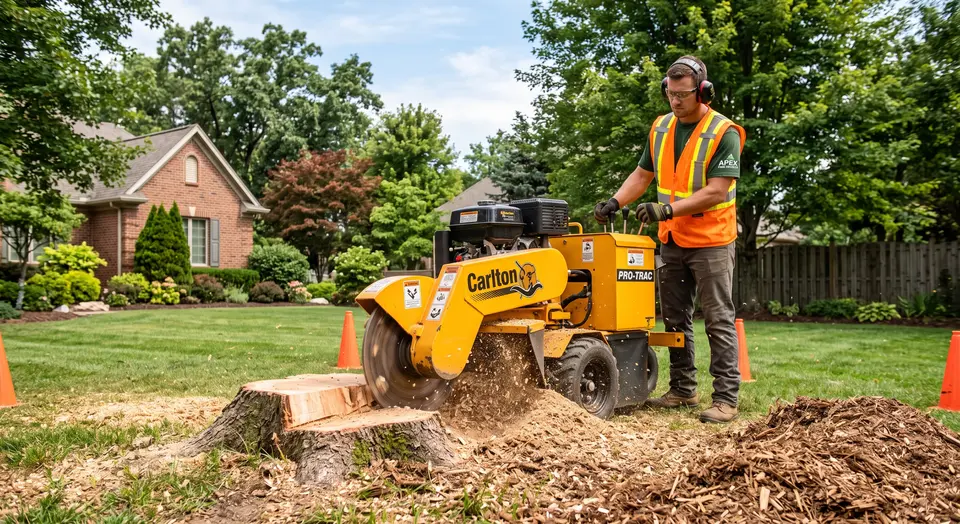
Worker in an orange safety vest and ear protection running a yellow stump grinder through a cut stump on a suburban lawn, wood chips piling up beside it

Grinding vs. Full Stump Removal: Know the Difference First

Folks often use these two terms like they are interchangeable. They are not. Understanding the distinction can save you some hassle, some cash, and a torn-up lawn.

Stump Grinding

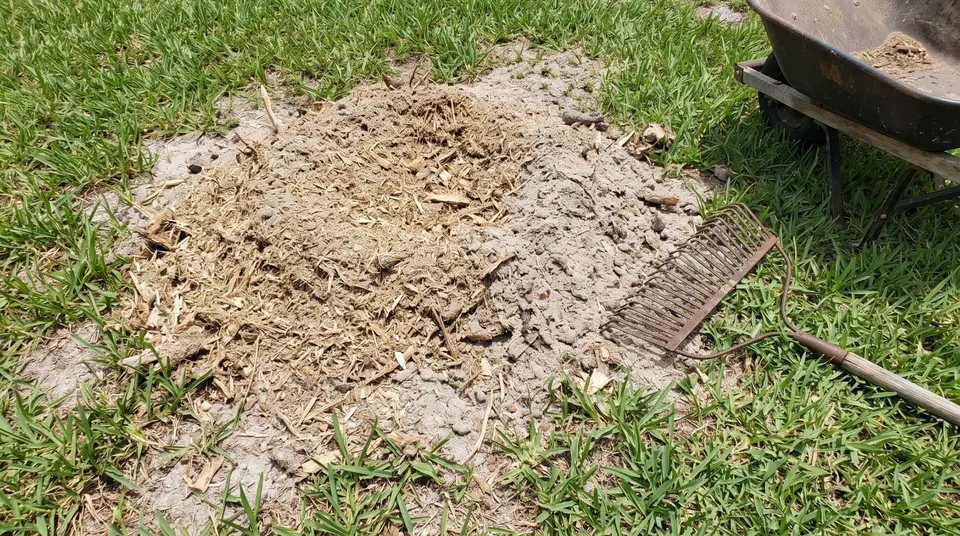
Low mound of fresh wood chips and sandy soil where a stump was ground out of a lawn, with a rake and wheelbarrow beside it

With tree stump grinding, a specialized machine with a spinning cutting wheel gradually shaves the stump down. It turns the wood into a pile of chips, bit by bit. The stump ends up well below ground level, so it's out of sight and no longer a tripping hazard. The roots stay put in the soil and slowly rot away on their own.

Tree stump grinding is usually quicker and easier on your yard. Your grass, flower beds, and nearby plants can mostly stay put.

Grinding leaves behind a small area of wood chips and loose soil. You can reuse those chips as mulch (opens in new tab), or rake them out, add some topsoil, and reseed.
Full Stump Removal

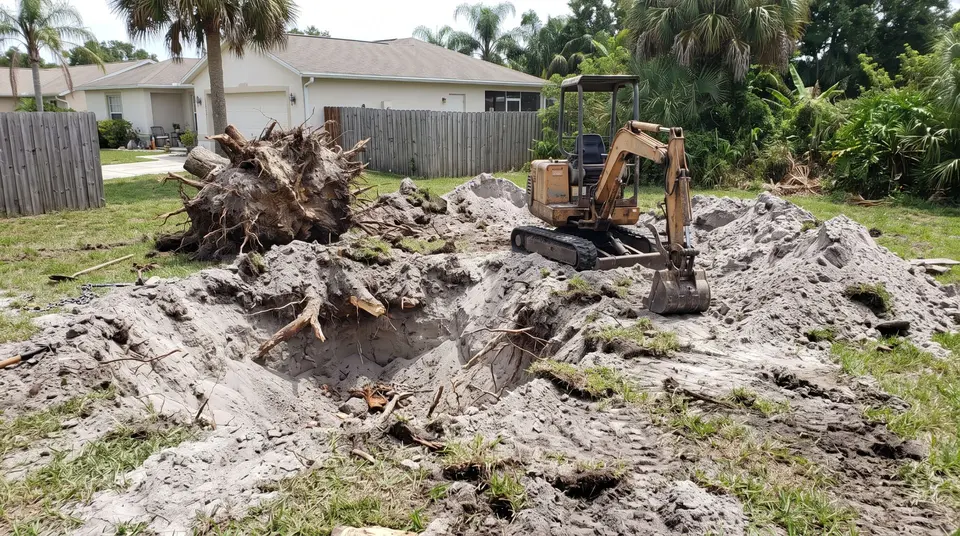
Large excavated hole in a sandy backyard with a pulled-out stump and root ball and a mini excavator beside it

Full removal is a different job entirely, and a much bigger one. It means digging or pulling the entire stump out of the ground, along with its main root system. That takes a lot more digging, usually with heavier equipment. You're left with a sizable hole that needs filling, and the surrounding ground often gets disturbed too.

Full removal gets rid of more of the root system, but it also means more digging, a bigger hole, and a lot more cleanup.

Full removal can sometimes affect buried utility lines (opens in new tab), sprinkler pipes, and even the roots of other trees you want to keep healthy.

So when does full removal make more sense?

One thing to keep in mind about tree stump grinding: as those roots underground slowly rot away, the soil can settle a bit. You might notice a small dip in that spot later on. That's normal, and a little extra topsoil usually sorts it out.

Mostly when you need that exact spot of ground to be completely clear and solid. Maybe you're planning a new patio, a pool, a shed, or an addition right where that old tree used to be. Or you want to plant a new tree in the same spot. In those cases, old roots under the surface could get in the way, and tree stump grinding alone might not be enough.

For almost everything else, tree stump grinding does the trick well. Maybe you just want that stump gone so you can mow straight across the lawn. Or you're tired of guests tripping over it. Want to lay down new sod or plant a flower bed nearby? Grinding handles all of that without turning your yard into a big excavation site.

Before you even call someone, ask yourself one simple question: what are your plans for that spot next?

If you're thinking grass, mulch, or just leaving it alone, tree stump grinding is probably all you need. If you're planning to build on it or plant another tree right there, let's talk through full removal options first. Our team specializes in tree stump grinding, and we would rather give you the right advice up front than sell you a job that doesn't fit your plans.

What Happens During a Grinding Visit

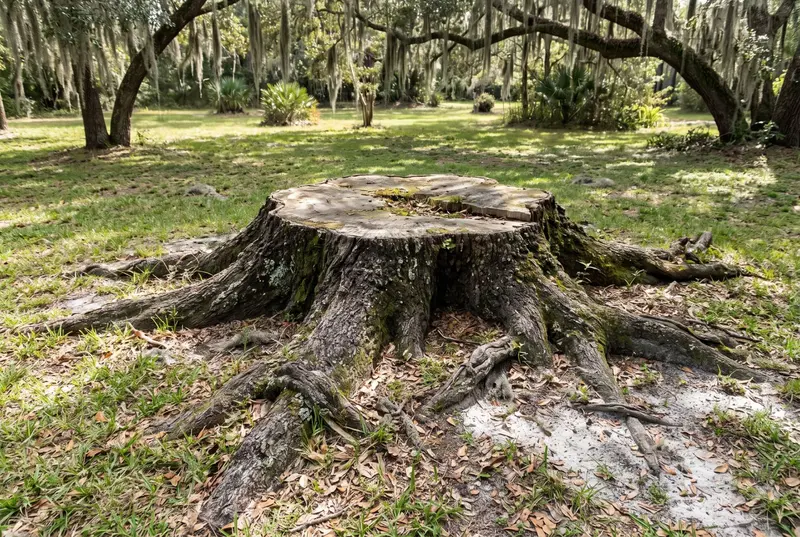
Weathered oak stump with thick roots flaring out across the grass under live oaks hung with Spanish moss

Once you know tree stump grinding is the right fit, the next question is usually simple: what's this going to be like in my yard? Here's a walk-through of a typical tree stump grinding job, so nothing catches you off guard.

  1. Before work starts, the area around the stump needs to be clear and safe.

  2. During the tree stump grinding itself, expect some noise, similar to a big lawn mower or a wood chipper. Small chips and bits of dirt can fly out while grinding, so stay well back and avoid approaching the crew while the machine is in action.

  3. The stump gets worked down past the soil line, along with any surface roots.

    How long does it take? That depends on the stump's size and how easy they are to reach. A single open front-yard stump goes faster than three large oak stumps tucked behind a pool cage, for example.

  4. When the machine stops, you'll see a mound of wood chips mixed with soil where the stump used to be. In our sandy Orlando yards, that mix can look more like light, loose dirt than a pile of mulch. You have a few choices for what to do with it:

    • Spread the chips around nearby beds or trees. They make good mulch.

    • Rake them out, fill the spot with fresh topsoil, and lay sod or seed.

    • If you'd rather not deal with them, having it hauled away is an option.

That last point is worth asking about before the job day. Cleanup and chip removal aren't handled the same way by every company. Knowing what you'll be left with means you can plan your weekend, whether that's spreading mulch or picking up a few bags of topsoil.

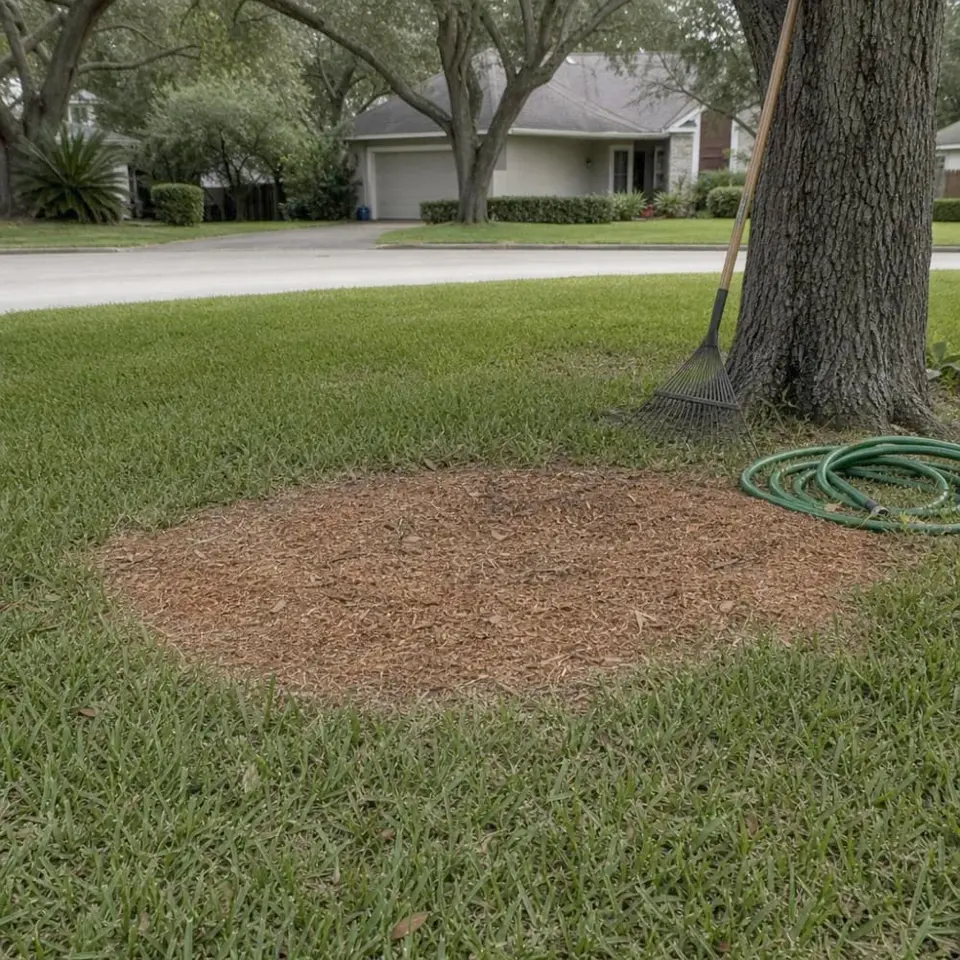
Flat circle of fresh mulch level with the lawn where a stump was ground, with a rake and garden hose by a tree in a quiet neighborhood
So here's the takeaway: a tree stump grinding visit is a fairly quick, contained job. With a clear yard, a known path in, and a plan for the chips, you'll end the day with a flat, safe spot ready for whatever you want to do next.

Not sure what your Stump grinding project needs? Ask us.

(407) 221-6533

Call now for a free estimate. We're ready to help.

Call Now

Frequently Asked Questions

Will a tree grow back after its stump is ground down?

No, grinding the stump itself stops that tree from growing back. The cutting wheel destroys the growth tissue at the base, so a fresh trunk can't form there. Some trees may still try sending up a few shoots from leftover roots nearby, but those sprouts weaken and die off without the stump to feed them. If you have a tree that's known for aggressive root suckering, mention it before the visit so we can watch that area closely.

Can I rent a machine and grind the stump myself?

You can, but oak stumps common in Orlando yards make this harder than it looks. Live oaks and laurel oaks flare wide right at the soil line, so the visible top is often much smaller than the hidden base. A rented grinder meant for a simple, narrow stump can struggle once it hits that wider flare or the shallow, spreading roots typical in our sandy soil. Hitting a sprinkler line or a utility line you didn't know about is also a real risk without experience spotting them first.

Is grinding usually cheaper than full stump removal?

Yes, grinding is almost always less costly than full removal because it's a far smaller job. Removal means digging out the whole root system and hauling away a large stump, which takes more time, heavier equipment, and leaves a big hole to fill. Grinding just shaves the stump below the soil line and leaves the roots to break down naturally, so there's less labor and far less cleanup involved.

Call Now (407) 221-6533